
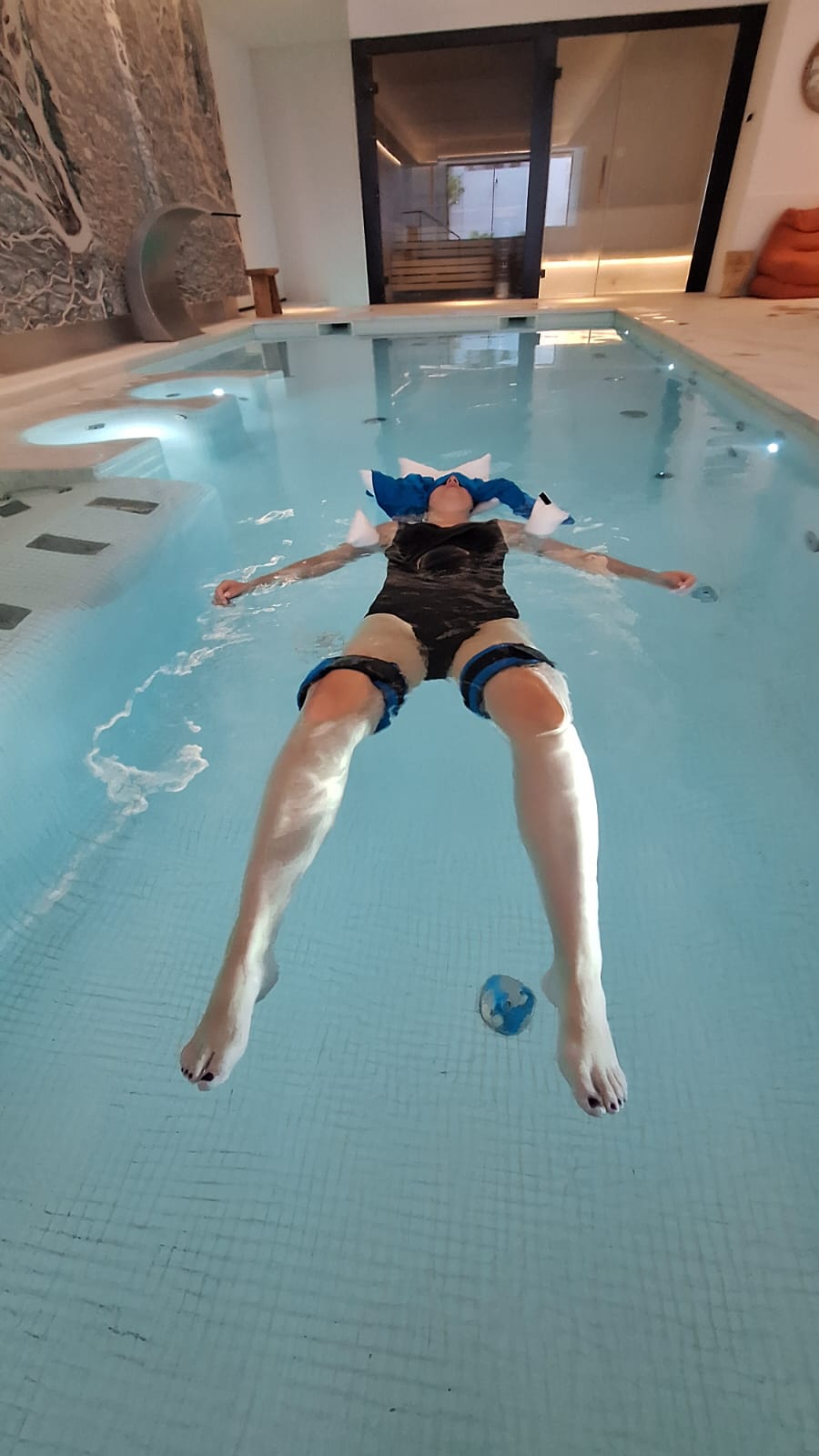
What is Watsu? What is water therapy and aquatic bodywork?
In a world filled with constant noise, digital overload, and physical tension, true relaxation can feel elusive. You have tried massages, yoga, and meditation—but have you ever considered floating?
Welcome to Watsu. Often described as a dance with the water, Watsu is a transformative therapy that is rapidly making a comeback at luxury spas and wellness retreats worldwide-3. But this is more than just a spa trend; it is a profound healing practice backed by decades of science and thousands of years of Eastern philosophy.
Here at Align & Flow, we believe in the power of water therapy to reconnect you with your body. This guide will explore the history, the science, and the incredible benefits of Watsu—and why it might be the missing piece in your wellness journey.
What Exactly is Watsu?
Watsu (Water + Shiatsu) is a form of passive aquatic bodywork performed in warm, chest-deep water (heated to approximately 95°F / 35°C)-5.
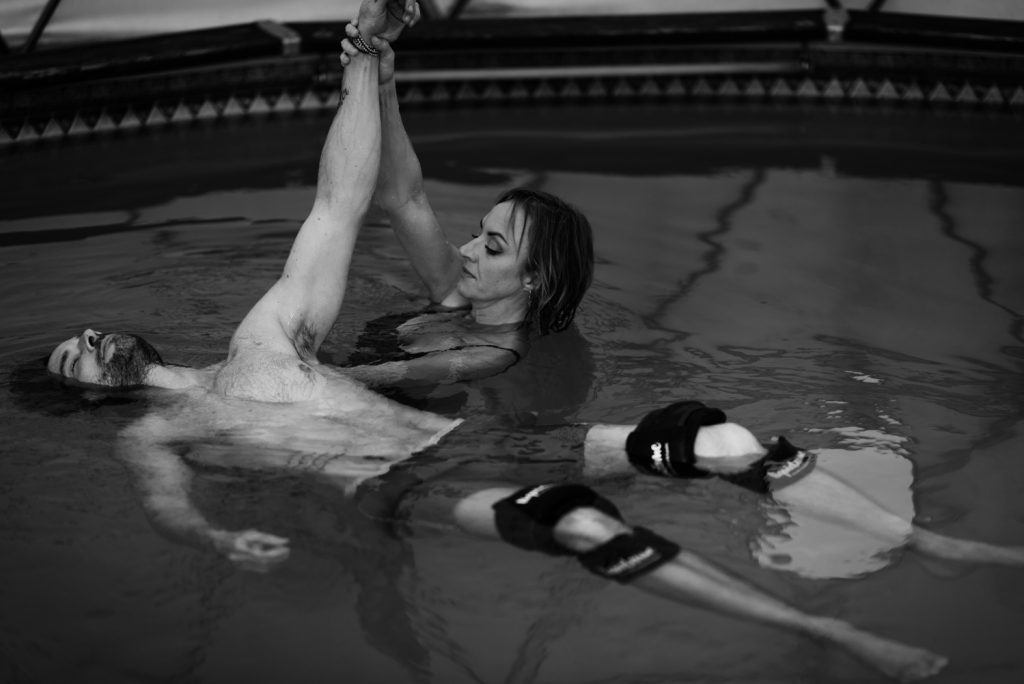
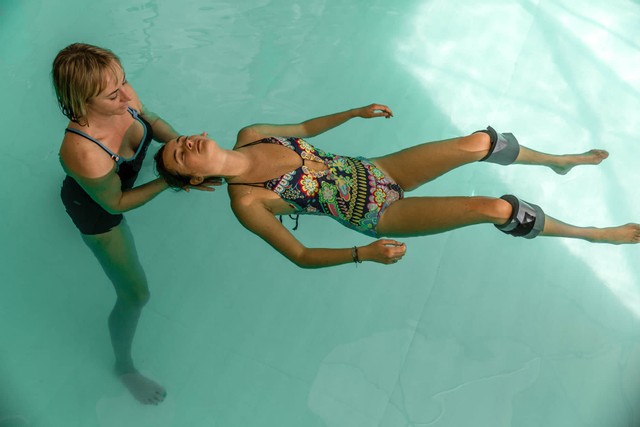
Unlike a standard massage where you lie still on a table, a Watsu session involves a trained practitioner gently cradling, rocking, stretching, and massaging you while you float weightlessly
The Origins: A Legacy of Healing
Watsu was created in 1980 by California-based Zen Shiatsu practitioner Harold Dull-2-6.
While teaching at Harbin Hot Springs, Dull noticed that the buoyancy of water allowed his students’ muscles to relax more deeply than on land. By adapting the thumb pressures and stretches of Shiatsu to the aquatic environment, he discovered a profound ability to release tension stored in the spine and joints-4-9. It was the first formal aquatic bodywork system developed, and it has since inspired variations like WaterDance and Jahara-8.

Watsu vs. Traditional Massage
- On Land: Gravity compresses the spine. The therapist fights against muscle tension.
- In Water: You lose 90% of your body weight. The spine decompresses naturally, allowing for painless stretching and mobilization that is impossible to achieve on a table-7.
The Science: What Does Watsu Do For Your Body?
While the feeling of Watsu is often described as meditative, the physiological effects are measurable. According to a 2022 systematic review and survey published by the National Institutes of Health (NIH), practitioners consistently confirm the effectiveness of Watsu across a wide range of areas-1.
1. Deep Relaxation & Nervous System Regulation
The most immediate benefit of Watsu is the “quieting of the sympathetic nervous system” (fight or flight) and the enhancement of the parasympathetic nervous system (rest and digest)-4.
- The Effect: The combination of warm water and rhythmic rocking induces a theta brainwave state—the same state experienced just before sleep or during deep meditation.
2. Pain Relief (Back, Neck & Fibromyalgia)
Watsu is cautiously recommended for use in pain- and stress-related conditions-1.
- The Data: A meta-analysis found that Watsu has a statistically significant beneficial effect on pain, with a Hedges’s g of -0.71 (a moderate-to-large effect size)-5.
- Who benefits: Pregnant women experiencing lower back pain, individuals with chronic neck tension, and those with fibromyalgia have reported substantial relief.
3. Increased Mobility and Flexibility
In the warm water, muscles that are tight from injury or cerebral palsy can be gently stretched without triggering a protective “guarding” reflex.
- The Result: Improved range of motion, joint mobilization, and relief of physical tension-1.
4. Mental Health & Emotional Release
Watsu is unique in its ability to touch deep-seated emotions.
- The Experience: Practitioners often report that the weightless environment allows for “spiritual experiences” and an increase in psychological health-1. Guests at top resorts often tear up during sessions, not from sadness, but from the release of stored trauma or stress-3.
What Can Watsu Do For You? Specific Use Cases
Wondering if Watsu is right for your specific condition? Here is how our services at Align & Flow can help you heal:
For Chronic Pain & Physical Ailments
- Arthritis: The warm water reduces joint stiffness and inflammation.
- Spinal Cord & Brain Injuries: Watsu is used in rehabilitation for stroke, Parkinson’s Disease, and cerebral palsy to improve head control and motor function-7-10.
- Muscle Tension: Relief of myofascial pain and muscle spasms.
For Stress & Mental Burnout
- Anxiety & Depression: The meditative state induced by Watsu lowers cortisol levels.
- Insomnia: Watsu has been shown to improve sleep quality and duration, particularly in patients with neurological conditions-10.
- PTSD: The feeling of being held safely in water helps regulate the nervous system.
For Energetic & Emotional Blockages
According to Traditional Chinese Medicine, Watsu helps re-stabilize the flow of Ki (Chi) —your vital life energy—through the meridian channels-2.
- Intimacy & Trauma: Studies suggest Watsu can help with relational problems, self-esteem, and even sexual health by reconnecting the mind with the physical body-2.
For Stress & Mental Burnout
- Anxiety & Depression: The meditative state induced by Watsu lowers cortisol levels.
- Insomnia: Watsu has been shown to improve sleep quality and duration, particularly in patients with neurological conditions-10.
- PTSD: The feeling of being held safely in water helps regulate the nervous system.
For Energetic & Emotional Blockages
According to Traditional Chinese Medicine, Watsu helps re-stabilize the flow of Ki (Chi) —your vital life energy—through the meridian channels-2.
- Intimacy & Trauma: Studies suggest Watsu can help with relational problems, self-esteem, and even sexual health by reconnecting the mind with the physical body-2.
What to Expect During a Session at Align & Flow
If you are new to aquatic bodywork, you might feel nervous. Here is how to prepare:
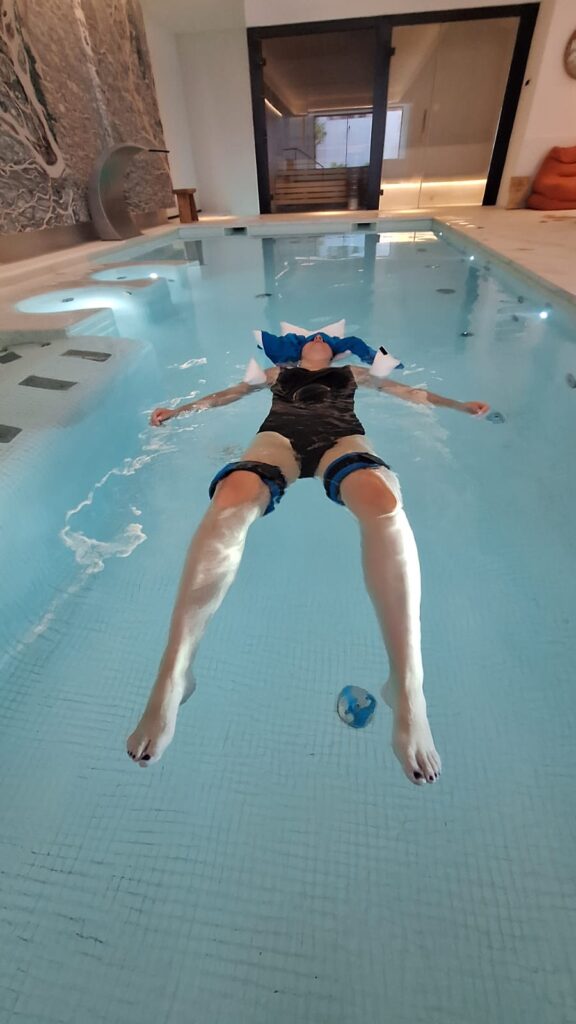
- The Environment: The pool is dimly lit and quiet (often with underwater music). The water is saltwater or fresh, heated to skin temperature to blur the line between your body and the water-3.
- The Float: You will lie on your back. The practitioner supports your head, shoulders, and sacrum. You will likely wear earplugs to keep the water out and the silence in-3.
- The Movement: You will be gently drifted across the water. The practitioner will perform slow, sweeping stretches, twists, and cradling positions.
- The Finale: By the end of a session (usually 60–90 minutes), most people enter a state of “effortless meditation.” Time and space lose their meaning-9.
“There’s no better way to explore your inner thoughts than floating weightlessly and being cared for.” – Robert Stackus, Watsu Practitioner-3
Is Watsu Safe? (Contraindications)
Watsu is generally safe for all ages, but there are some contraindications to consider for pool therapy-7:
- Do not engage in Watsu if you have: Fever, open skin infections, uncontrolled epilepsy, blood clots, cardiac failure, or unstable angina.
- Precautions needed if you have: A perforated eardrum (use earplugs), MS (sensitivity to heat), or severe spinal cord injuries (requires medical clearance).
Ready to Align & Flow?
At Align & Flow, we are proud to carry the legacies of the power of water- especially warm water and healing
Whether you are an athlete with a tight back, a new mother needing restoration, or someone simply drowning in stress, Water therapy offers a space to land. It is a journey home to yourself.
Are you ready to float?
Frequently Asked Questions (FAQ)
Q: Is Watsu just for pregnant women?
A: No, while it is excellent for pregnancy-related low back pain, Watsu is used for everyone from athletes to those with chronic neurological conditions-10.
Q: Do I need to know how to swim?
A: No. The water is chest-deep, and the practitioner supports you 100% of the time. You never have to put your face in the water unless you choose to (as in WaterDance variations).
Q: Is it just a massage?
A: It is a combination of massage, physical therapy, and meditation. Because you are floating, the stretches go much deeper than a table massage without the pain-3.
Sources & Further Reading
(Internal linking strategy: Link to your existing pages here)
- [Read more about the history of Water Therapy at Align & Flow]
- [External Source: NIH Study on Watsu for Pain Management]-1
- [External Source: Healthline’s Guide to Watsu]-6
Meta Description:
What is Watsu? Discover the benefits of this aquatic bodywork therapy. Combining Shiatsu massage and warm water, Watsu relieves pain, reduces stress, and improves mobility. Learn more at Align & Flow.
Keywords: Watsu, Water Therapy, Aquatic Bodywork, Watsu benefits, pain relief, water shiatsu, Harold Dull, hydrotherapy, Align and Flow, anxiety relief.
